
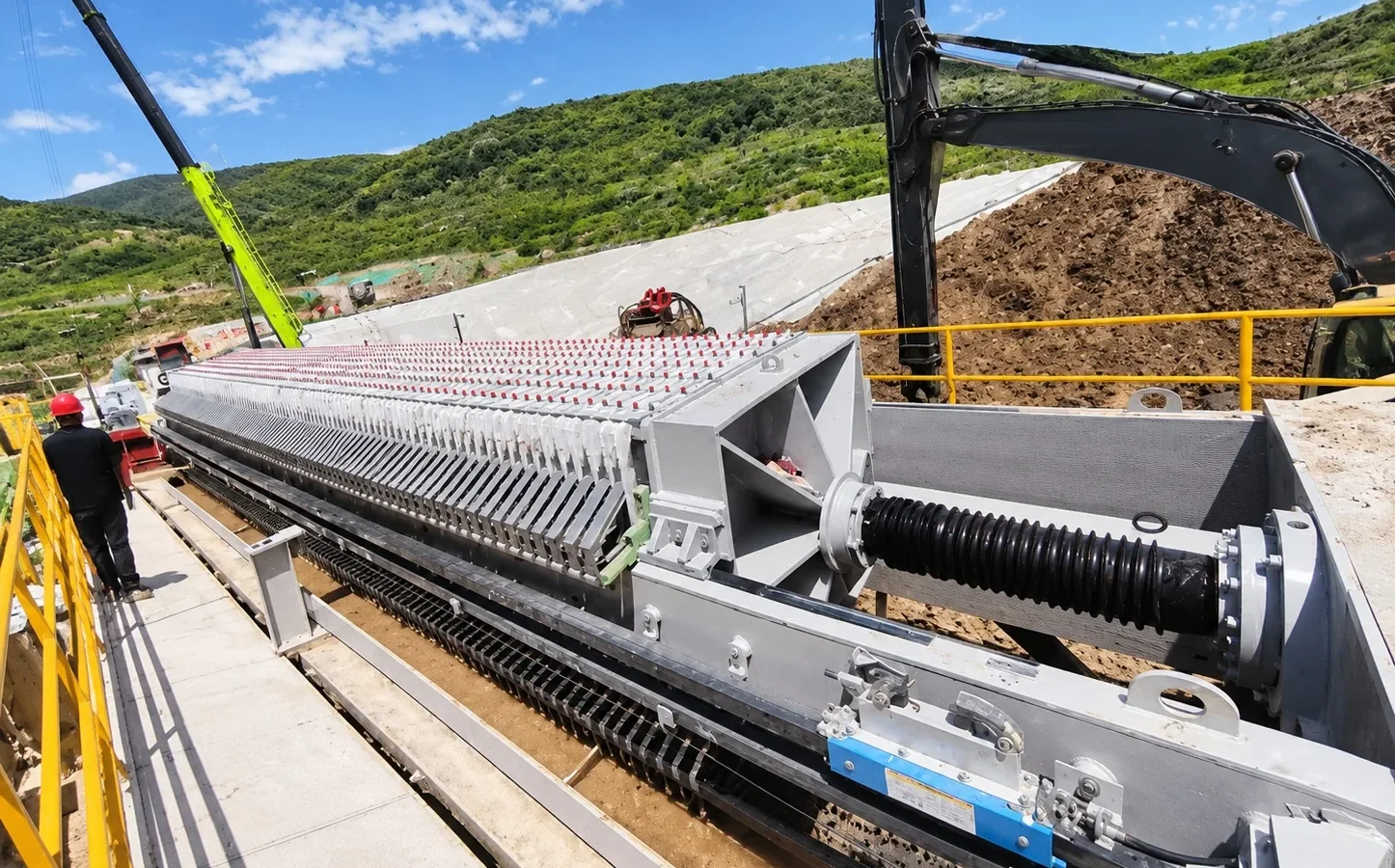
Efficient solid-liquid separation is an essential part of many industrial processes. Whether a facility handles wastewater sludge, mineral concentrates, chemical suspensions, or food-processing residues, the filtration equipment it uses can directly influence production efficiency, operating costs, and waste management.
Among the available separation technologies, filter presses remain a widely used option for applications requiring reliable solids recovery and batch dewatering.
However, not all filter presses are designed for the same purpose. Selecting suitable equipment involves more than comparing machine dimensions or purchase prices. Different designs offer different advantages in filtration performance, cake discharge, maintenance, and automation.
This guide explores the main types of industrial filter presses and explains how to evaluate them for specific processing requirements.
Understanding the Filter Press Working Process
A filter press separates suspended solids from liquids by applying pressure to a slurry inside a series of filtration chambers.
During operation, a feed pump transfers slurry into the closed filter press. Filter cloths retain solid particles while allowing liquid to pass through the filtration media and drainage channels.
As filtration continues, the retained solids accumulate into compact layers known as filter cakes.
Once the filtration cycle is complete, the equipment is opened and the accumulated cakes are discharged. Depending on the machine configuration, cake removal may be performed manually or through an automated mechanism.
A typical operating sequence includes:
- Closing and securing the filter plate assembly.
- Pumping slurry into the filtration chambers.
- Separating liquid through the filter cloth.
- Forming filter cakes as solids accumulate.
- Completing optional washing or squeezing operations.
- Opening the press and discharging the cakes.
- Preparing the equipment for the next cycle.
Although these basic principles are shared by many filter press designs, their mechanical structures and operating capabilities can vary considerably.
Main Types of Industrial Filter Presses
1. Chamber Filter Press
The chamber filter press is one of the most commonly used configurations for industrial solid-liquid separation.
It uses recessed filter plates that create enclosed chambers when pressed together. Slurry enters these chambers, and solids gradually accumulate against the filter cloth as liquid is removed.
Unlike a membrane filter press, a conventional chamber filter press does not use an additional membrane squeezing stage.
Its relatively straightforward construction makes it suitable for numerous industrial applications.
Common applications:
– Municipal and industrial wastewater treatment
– Chemical processing
– Mining and mineral processing
– Ceramic manufacturing
– General sludge dewatering
Chamber filter presses are often considered when operators need dependable filtration performance, manageable maintenance requirements, and a practical balance between equipment cost and operating efficiency.
However, the final moisture content of the filter cake depends on slurry properties, filtration pressure, cycle duration, and filter media selection.
2. Membrane Filter Press
When reducing residual moisture in filter cakes is a major priority, a membrane filter press may offer advantages over a conventional chamber design.
This equipment incorporates flexible membranes within selected filter plates.
After the initial filtration stage, a squeezing medium, commonly water or compressed air where permitted by the design, expands the membranes to apply additional pressure to the formed filter cakes.
This secondary compression can remove more liquid from the solids.
Key advantages may include:
- Lower residual filter cake moisture
- Improved dewatering of suitable materials
- Potential reduction in downstream drying requirements
- Better control over the final cake condition
- Potential reductions in cake handling or disposal costs
Membrane filter presses are frequently evaluated for mineral processing, industrial sludge treatment, and chemical production.
However, they may involve greater equipment complexity and additional maintenance considerations.
The actual improvement in cake dryness should be confirmed through filtration testing rather than assumed from machine type alone.
3. Plate and Frame Filter Press
The plate and frame filter press uses alternating plates and separate frames to create spaces where filter cakes accumulate.
Filter cloth or another compatible filter medium is installed between the supporting surfaces to retain suspended particles during filtration.
This configuration is particularly useful in applications requiring flexible filtration media selection or where specific filtration characteristics are important.
Typical industrial uses include:
- Food and beverage processing
- Specialty chemical manufacturing
- Pharmaceutical processing, subject to hygienic design requirements
- Edible oil filtration
- Small-batch industrial filtration
Depending on the equipment design, plate and frame systems can accommodate different filter media and cake thickness requirements.
Nevertheless, their operational suitability must be evaluated against the required processing capacity, solids loading, cleaning procedures, and acceptable labor requirements.
4. High-Pressure Filter Press
Certain slurries, particularly those containing fine mineral particles or materials that are difficult to dewater, may require specialized high-pressure filtration equipment.
High-pressure filter presses are engineered with pressure-rated components designed for demanding operating conditions.
Some machines use circular filter plates, while other high-pressure configurations use different plate geometries.
The choice of structure depends on the manufacturer’s mechanical design and the intended process.
These systems may be suitable for:
- Kaolin processing
- Fine mineral concentrates
- Ceramic raw materials
- Selected mining applications
- Difficult-to-filter industrial slurries
Higher filtration pressure does not automatically guarantee better performance.
Particle size distribution, slurry compressibility, filter cloth permeability, and operating conditions all influence the final result.
Therefore, high-pressure equipment should be selected only after evaluating the material being processed and the pressure limits of the complete filtration system.
How Different Filter Press Types Compare
Understanding the practical differences between equipment categories can help buyers establish an initial shortlist.
| Filter Press Type | Main Characteristic | Common Selection Priority |
|---|---|---|
| Chamber Filter Press | Recessed plates form filtration chambers | General-purpose sludge and slurry dewatering |
| Membrane Filter Press | Additional cake squeezing stage | Lower cake moisture |
| Plate and Frame Filter Press | Separate frames support cake formation | Flexible filtration media and specialized processing |
| High-Pressure Filter Press | Pressure-rated construction for demanding applications | Difficult-to-dewater materials |
These descriptions provide general guidance rather than fixed performance rankings.
A well-configured chamber filter press may perform better for a particular slurry than a membrane press that has not been properly sized or tested.
Five Factors to Consider Before Purchasing a Filter Press
1. Slurry Characteristics
The nature of the material being processed is one of the most important selection factors.
A suitable filtration system should account for solids concentration, particle size distribution, viscosity, temperature, and chemical composition.
For example, wastewater sludge may behave very differently from mineral tailings even when both materials have similar solids concentrations.
Chemical compatibility must also be checked carefully because some slurries require specialized filter plate materials, seals, or filtration media.
2. Required Processing Capacity
Before selecting a machine, determine how much slurry or dry solid material must be processed over a defined operating period.
Capacity calculations should account for:
- Feed slurry volume
- Feed solids concentration
- Required operating hours
- Expected cycle duration
- Filtration and discharge times
- Planned cleaning and maintenance
Filtration area is an important design parameter, but it cannot independently determine actual throughput.
The filtration rate of the specific slurry must also be considered.
3. Target Filter Cake Moisture
The required moisture level of the discharged solids can significantly influence equipment selection.
If filter cakes are transported, disposed of, reused, or processed further, moisture reduction may affect overall operating costs.
A membrane filter press can be worth evaluating when additional cake squeezing provides meaningful benefits.
However, the economic value of reducing moisture should be compared against equipment investment, energy consumption, maintenance, and cycle time.
4. Automation Requirements
Industrial filter presses are available with different levels of automation.
Depending on the model, optional systems may include automatic plate shifting, filter cloth washing, cake discharge assistance, and process monitoring.
Automation can help reduce routine manual operations and improve process consistency.
Facilities processing large quantities of slurry may benefit from automated operation, while smaller installations may prefer simpler equipment.
The appropriate automation level should reflect actual production requirements and available maintenance resources.
5. Equipment Durability and Maintenance
A filter press is a long-term industrial investment.
The reliability of the hydraulic system, structural frame, filter plates, seals, and filter cloths should be evaluated before purchasing.
Operators should also consider how easily replacement parts can be obtained and whether the equipment design allows convenient inspection and maintenance.
A machine with a lower initial price may not always provide the lowest lifetime operating cost.
Filter Press Applications Across Different Industries
Wastewater Treatment
Filter presses are widely used to separate water from industrial and municipal sludge.
The objective is typically to reduce sludge volume, improve handling, and prepare the resulting cake for further treatment or disposal.
Equipment selection depends on sludge composition, conditioning methods, required capacity, and disposal requirements.
Mining and Mineral Processing
Mining operations often generate large quantities of slurry containing suspended mineral particles.
Filter presses can help recover process water and produce filter cakes that are easier to transport or manage.
They may also support tailings management strategies where improved solids handling and water recovery are required.
Chemical Manufacturing
Chemical processes require filtration equipment compatible with specific materials and operating conditions.
Chemical resistance, temperature limits, pressure ratings, and filtration media selection are particularly important.
The process may prioritize liquid recovery, solid recovery, or both.
Food and Beverage Processing
Some food-processing operations use filter presses to clarify liquids or separate valuable materials.
For these applications, hygienic construction, compatible contact materials, effective cleaning, and applicable food-contact requirements are essential.
Stainless steel configurations may be considered where their material properties and cleanability meet the process requirements.
Why Filtration Testing Matters
One of the most effective ways to reduce uncertainty in equipment selection is to conduct filtration testing with a representative sample of the actual slurry.
Testing can provide useful information about cake formation, filtration rate, achievable moisture content, and potential filter cloth problems.
A practical evaluation may investigate:
- Filtration behavior under different pressures
- Filter cake formation and release
- Liquid clarity
- Cycle duration
- Filter media compatibility
- Cake moisture after filtration and optional squeezing
These results can guide the choice of filter press type, filtration area, plate configuration, and operating parameters.
For projects involving unusual materials or demanding performance targets, laboratory or pilot-scale testing is especially valuable.
Final Thoughts
Selecting a filter press should begin with the process requirements rather than a particular machine model.
Chamber presses offer a practical solution for many conventional dewatering applications. Membrane presses introduce additional squeezing capability, while plate and frame designs serve applications with specialized filtration requirements. High-pressure systems may be appropriate for certain challenging materials.
No single design is ideal for every application.
By evaluating slurry characteristics, processing capacity, cake moisture requirements, automation needs, and maintenance costs, industrial buyers can make more informed equipment decisions.