
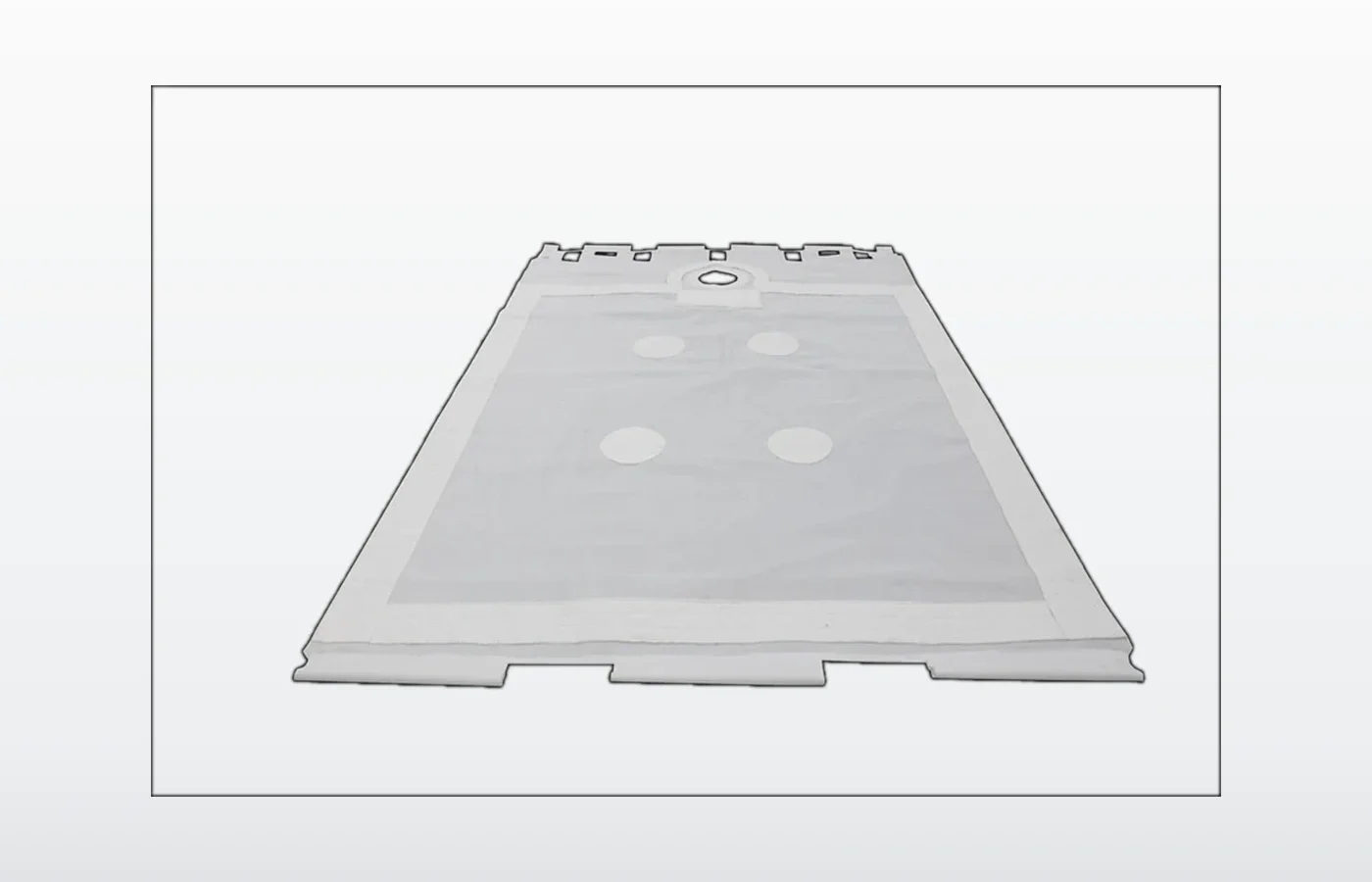
Filter cloth blinding is usually a gradual condition rather than a sudden failure. The press may still make a cake, but the filtration phase takes longer, the feed pressure rises earlier and the cake becomes harder to release. Cleaning the cloth is only effective when the deposit causing the loss of permeability has been identified.
Read the symptoms before choosing a wash
A cloth can lose performance for several reasons. Fine particles may lodge in the weave, scale may form inside the flow channels, organic material may coat the surface, or a polymer residue may bridge the openings. Each condition responds differently to water, alkali, acid or mechanical cleaning.
Record the change in pressure, filtrate flow, cycle time, cake moisture and cake release before cleaning. If only one chamber is affected, inspect the plate and cloth locally before treating the whole press. A single damaged cloth or leaking port can imitate a general blinding problem.
Inspect the cloth and the chamber
After discharge, look for a stiff surface, visible deposits, distorted weave, abrasion at the plate edge and cake remaining in the corners of the chamber. Check the filtrate ports and drainage channels as well. A clear cloth can still perform poorly if the drainage path behind it is blocked.
Compare the affected area with a clean section of the same cloth. If the difference is local, a mechanical or sealing problem is more likely. If the entire cloth is uniformly stiff or discoloured, the cause may be the feed chemistry, conditioning or cleaning procedure.
Match the cleaning method to the deposit
- Water or low-pressure rinse: suitable for loose cake residue and some soluble material, but it may not remove material trapped inside the weave.
- Alkaline wash: can help with organic films, oils and some polymer residues, provided the cloth and plate materials are compatible.
- Acid wash: can dissolve scale and mineral deposits, but the acid type, concentration and temperature must suit the cloth, plates and drainage components.
- Mechanical action: brushing or high-pressure cleaning can remove surface material, but it can also distort the weave or damage the cloth surface.
- Specialist solvent or detergent: may be needed for a specific organic deposit, but compatibility and wastewater handling must be checked first.
There is no universal wash recipe. A method that works on calcium scale may be ineffective on iron deposits or organic fouling, and an aggressive wash can shorten cloth life even when it restores flow.
Control an acid wash as a process step
Before an acid wash, confirm the cloth material, the plate material, the gasket and the drainage system are compatible with the proposed acid. Use the lowest concentration and temperature that produce a measurable improvement. Provide ventilation, personal protective equipment and a defined route for the spent wash solution.
Test on one cloth or a small section first. Rinse thoroughly afterwards, because residual acid can damage the cloth or contaminate the next batch. Record the concentration, contact time, temperature and rinse volume so the treatment can be repeated consistently.
Measure whether cleaning worked
The test is not whether the cloth looks cleaner. Repeat a representative cycle and compare the pressure curve, filtrate rate, filtrate clarity, cycle time and cake release with the baseline. If the pressure still rises early, the deposit may remain in the depth of the cloth or the drainage path may still be restricted.
Inspect the cloth again after the test cycle. A surface that quickly collects the same deposit suggests that the feed or conditioning conditions are driving the problem, not that the cleaning method was too weak.
Know when replacement is the better decision
Replacement is appropriate when the weave is worn, the cloth is stretched, seams are failing, or repeated cleaning no longer restores a stable cycle. A cloth that fails at the plate edge may indicate a mechanical issue that will damage a new cloth as well. Correct the cause before replacing it.
Keep a simple cloth history: installation date, cleaning method, pressure trend, filtrate clarity and reason for removal. That record makes it easier to distinguish normal wear from a process change and to compare cloth constructions on the same duty.
Prevent the next cycle from repeating the problem
Review feed solids, particle size, conditioning dose and mixing before changing the cloth again. Confirm that the cloth is correctly installed and that the chamber fills evenly. A wash schedule based on pressure or flow trends is more useful than a fixed interval, because it responds to the actual condition of the medium.
Cleaning is most effective when it is treated as a diagnostic activity: identify the deposit, select a compatible method, verify the result with cycle data and fix the upstream cause when the deposit returns.
Cleaning chemicals and temperatures should be confirmed against the cloth and plate manufacturer’s compatibility guidance. A trial wash on a representative cloth is preferable to treating the entire press with an untested method.