Industrial Sludge Dewatering
Process and wastewater sludge dewatering, with the filtration cycle matched to the sludge chemistry.
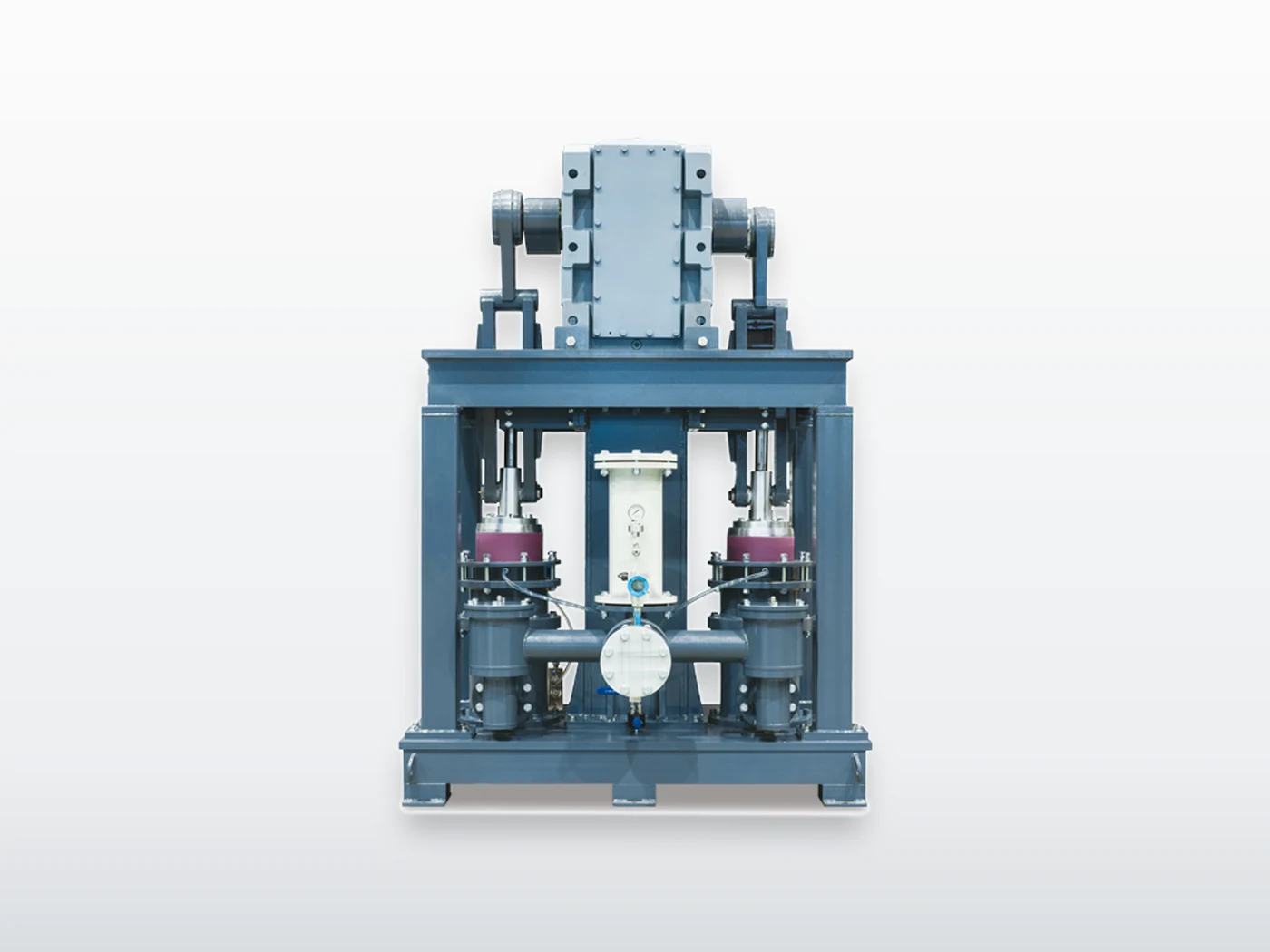
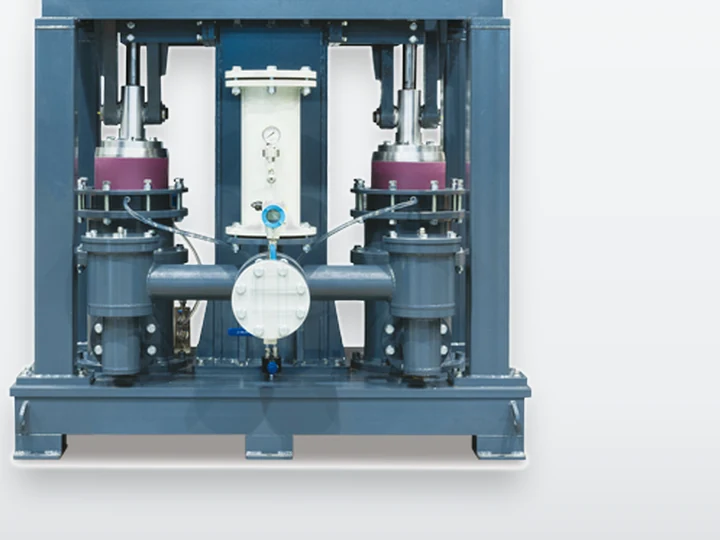
Diaphragm feed pumps sized to the press and run duty and standby.
The chambers fill at the rate the cake can accept, and the pressure rises as it builds. The feed pump sets that curve: too small and the cycle stretches, too large and the cloth blinds at the feed port. We match the pump to the press, the slurry and the cycle, and duplicate it where the plant cannot stop.
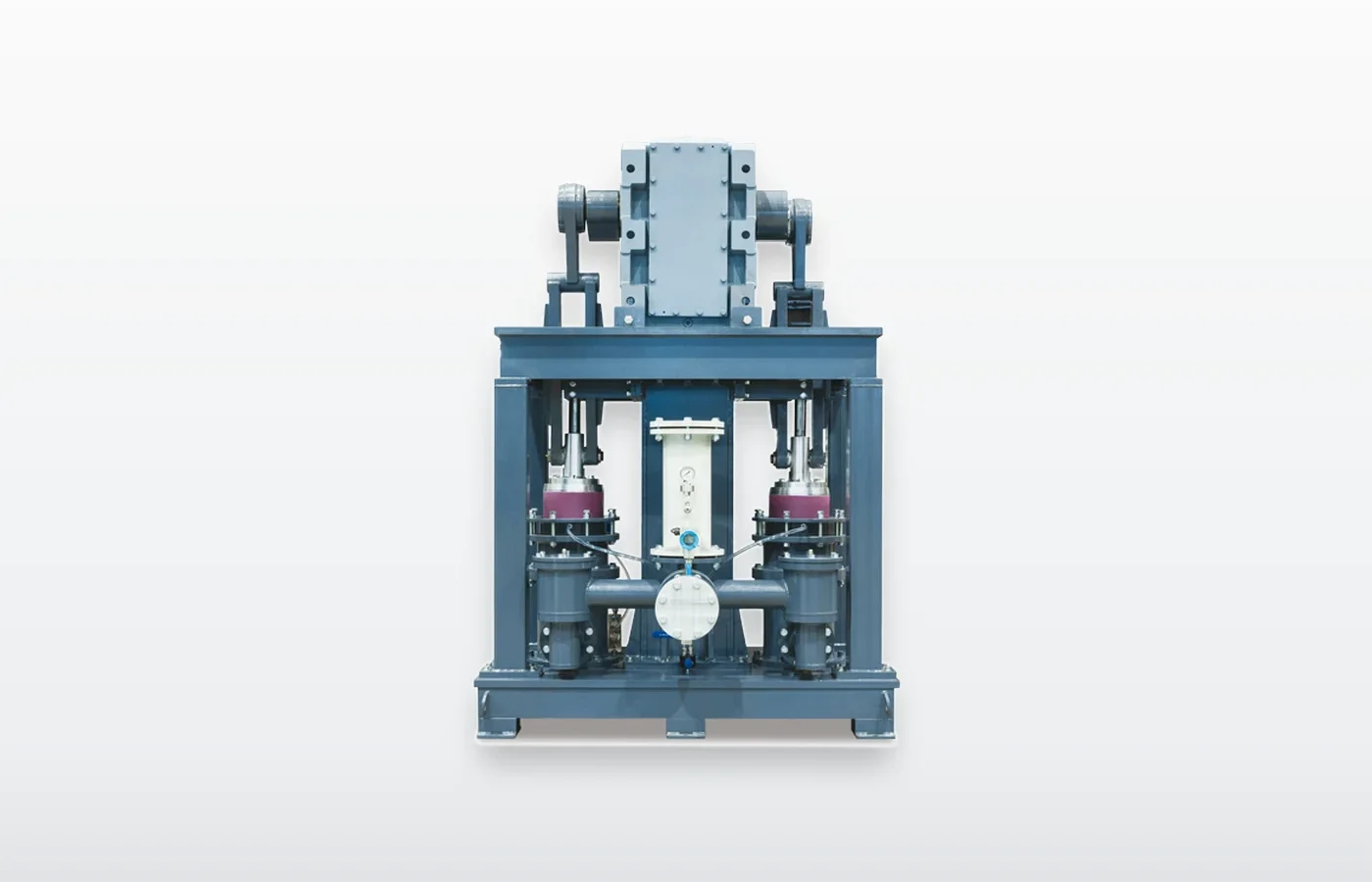
A press is only as even as its feed. The pump has to hold its flow while the pressure rises — which is what a diaphragm pump does and a centrifugal pump does not — and then keep feeding at a controlled rate while the chambers finish filling, so every chamber reaches the same cake thickness.
DELIAN matches the pump to the duty: flow and pressure curve from the press and the cycle, diaphragm and valve material from the solids and the chemistry, drive from the supply on site. Where the plant runs continuously the set is duty and standby, changing over on the level in the feed tank or on the discharge pressure, with the alarm going to the control room.
Flow and pressure curve are set from the chamber volume and the cycle rather than from a series.
Two pumps, one running: a diaphragm change does not stop the plant.
The chambers fill evenly from the feed port out, which is what keeps the cake thickness uniform.
Diaphragms, valves and seats chosen for the solids, the abrasiveness and the pH.
The feed rate is trimmed to the cycle and the slurry instead of being fixed by the pulley.
Harder valves, seats and liners for abrasive sand and grit slurries.
Typical range for this class of equipment — the figures for your unit are fixed in the quotation.
| Type | hydraulic diaphragm, single or double acting |
|---|---|
| Flow rate | 2 – 60 m³/h per pump |
| Discharge pressure | up to 1.6 MPa |
| Diaphragm | rubber, EPDM or PTFE-faced, chosen for the slurry |
| Valves | ball or flap, in the wear material the slurry asks for |
| Drive | electric motor; variable speed on request |
| Wetted parts | cast iron, stainless or lined |
| Control | local starter, level or pressure control, or the plant PLC |
| Redundancy | duty and standby set with automatic changeover |
| Supply | on the press skid, or as a standalone unit |
Process and wastewater sludge dewatering, with the filtration cycle matched to the sludge chemistry.
Excavation, diaphragm wall and wash-water sludge, reduced to a transportable cake.
Turning spent bentonite suspensions into stackable cake and reusable water.
Because the flow has to hold while the pressure rises. A centrifugal pump loses flow exactly when the cake starts to build, so the cycle stretches and the chambers fill unevenly.
Yes. The feed rate and the pressure curve are matched to the press and the cycle in front of us, and the pump arrives as a skid with its own starter.
From the level in the feed tank or from the discharge pressure, with the alarm in the control room and the changeover recorded in the plant log.
Three-phase power, suction from a slurry tank sized so the pump is never starved, and the discharge manifold to the press.
Every slurry is different. Send us your slurry characteristics and project requirements so our engineering team can evaluate a suitable dewatering solution.
Feed Pumps
Every slurry is different. Send us your slurry characteristics and project requirements so our engineering team can evaluate a suitable dewatering solution.