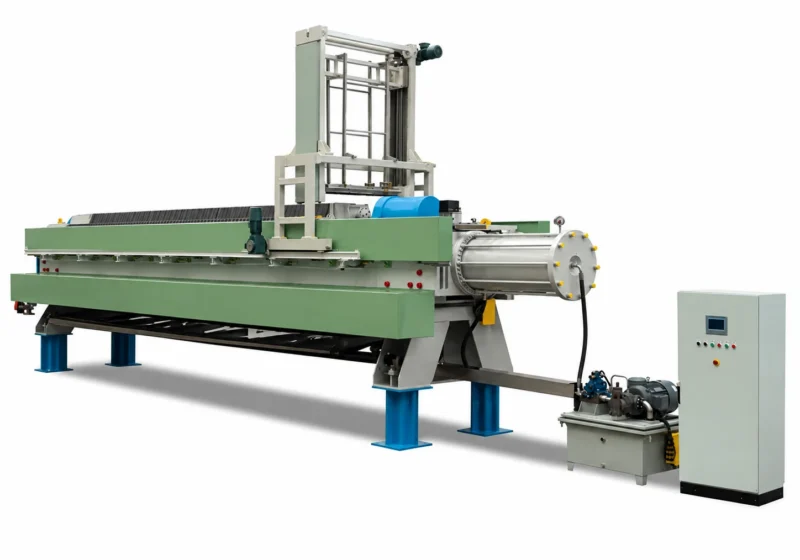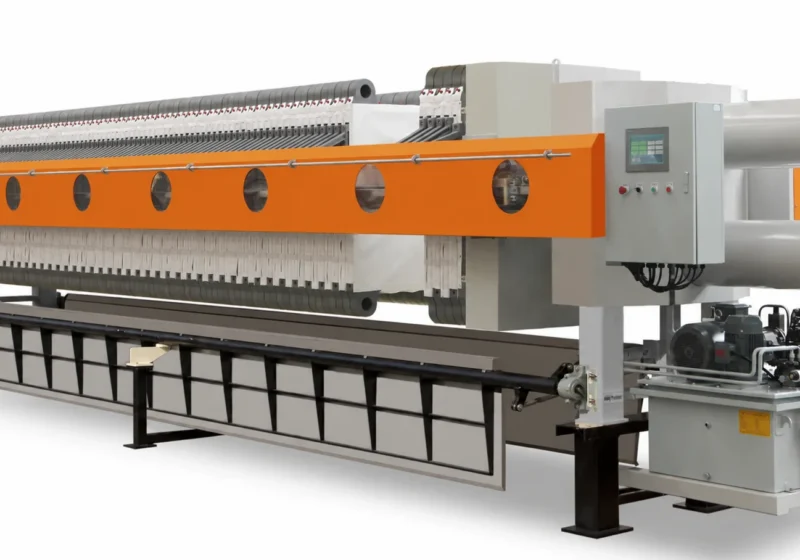
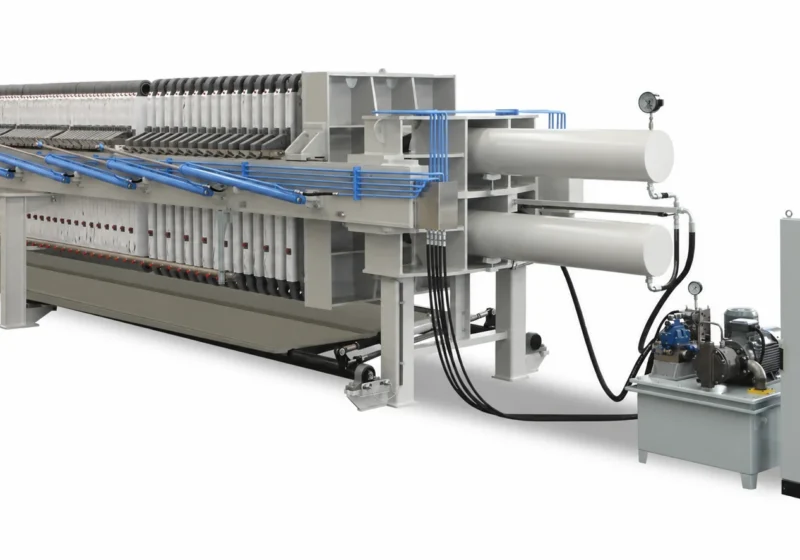
Chamber Filter Press
Plate-and-frame dewatering for construction and industrial slurry.
- Filtration area
- 10 – 250 m²
- Filtration pressure
- 0.6 – 1.6 MPa
- Capacity range
- 5 – 120 m³/h slurry feed
Turning spent bentonite suspensions into stackable cake and reusable water.
Bentonite holds water well, which is exactly why it needs conditioning before filtration. The plant is built around that chemistry.
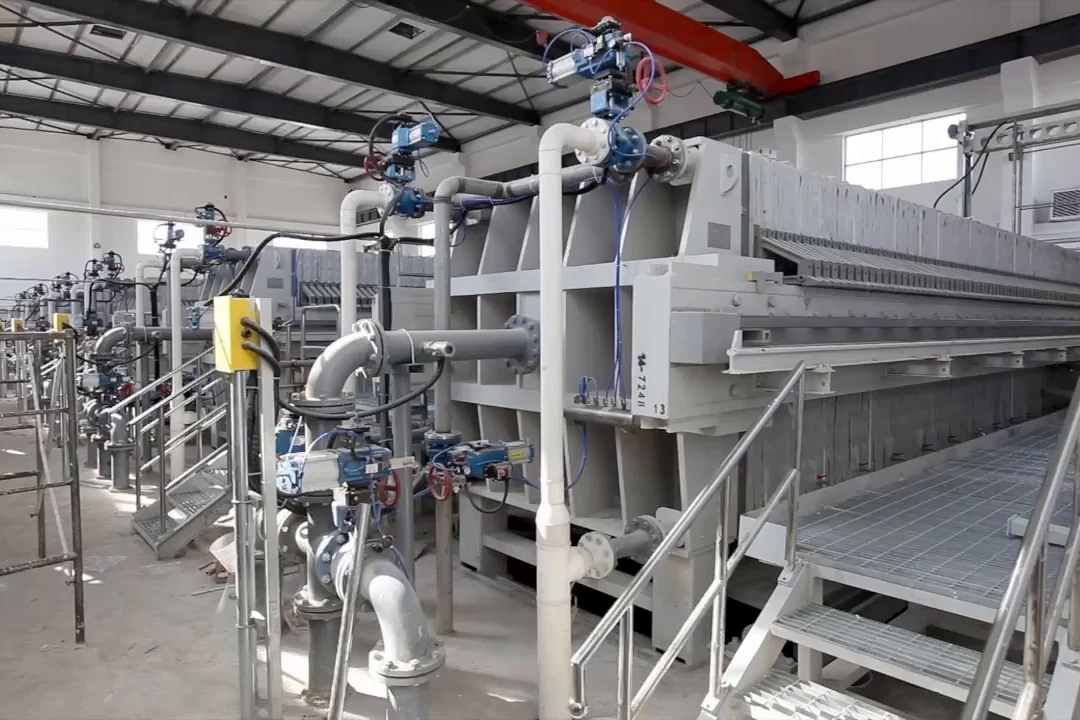
Spent suspension is buffered so dosing follows the load rather than the delivery. The cake is stacked and hauled away, and the clear filtrate returns to the mixing plant.
Each stage is selected around the slurry and the disposal route.
Spent suspension is held so dosing can follow the load.
Residual coarse material is removed before conditioning.
Two-stage dosing breaks the suspension so the fines will release water.
Chamber or membrane presses dewater the conditioned suspension.
Filtrate is clear enough to return to the mixing plant.
Equipment is configured around the capacity, solids concentration and target cake moisture of your project.
Plate-and-frame dewatering for construction and industrial slurry.
Squeeze dewatering for higher dry solids and shorter cycles.
Automated filtration cycles for continuous industrial operation.
The dose is set from a jar test on the actual suspension, not from a table.
Bentonite cake is thixotropic — the discharge arrangement follows that.
Where the filtrate goes decides how hard the filtration has to work.
Yes — the filtrate is typically returned to the bentonite mixing plant.
Only where the discharge route demands drier cake; chamber presses are often enough.
Every slurry is different. Send us your slurry characteristics and project requirements so our engineering team can evaluate a suitable dewatering solution.
Bentonite Slurry Dewatering
Every slurry is different. Send us your slurry characteristics and project requirements so our engineering team can evaluate a suitable dewatering solution.