Industrial Sludge Dewatering
Process and wastewater sludge dewatering, with the filtration cycle matched to the sludge chemistry.
Squeeze dewatering for higher dry solids and shorter cycles.
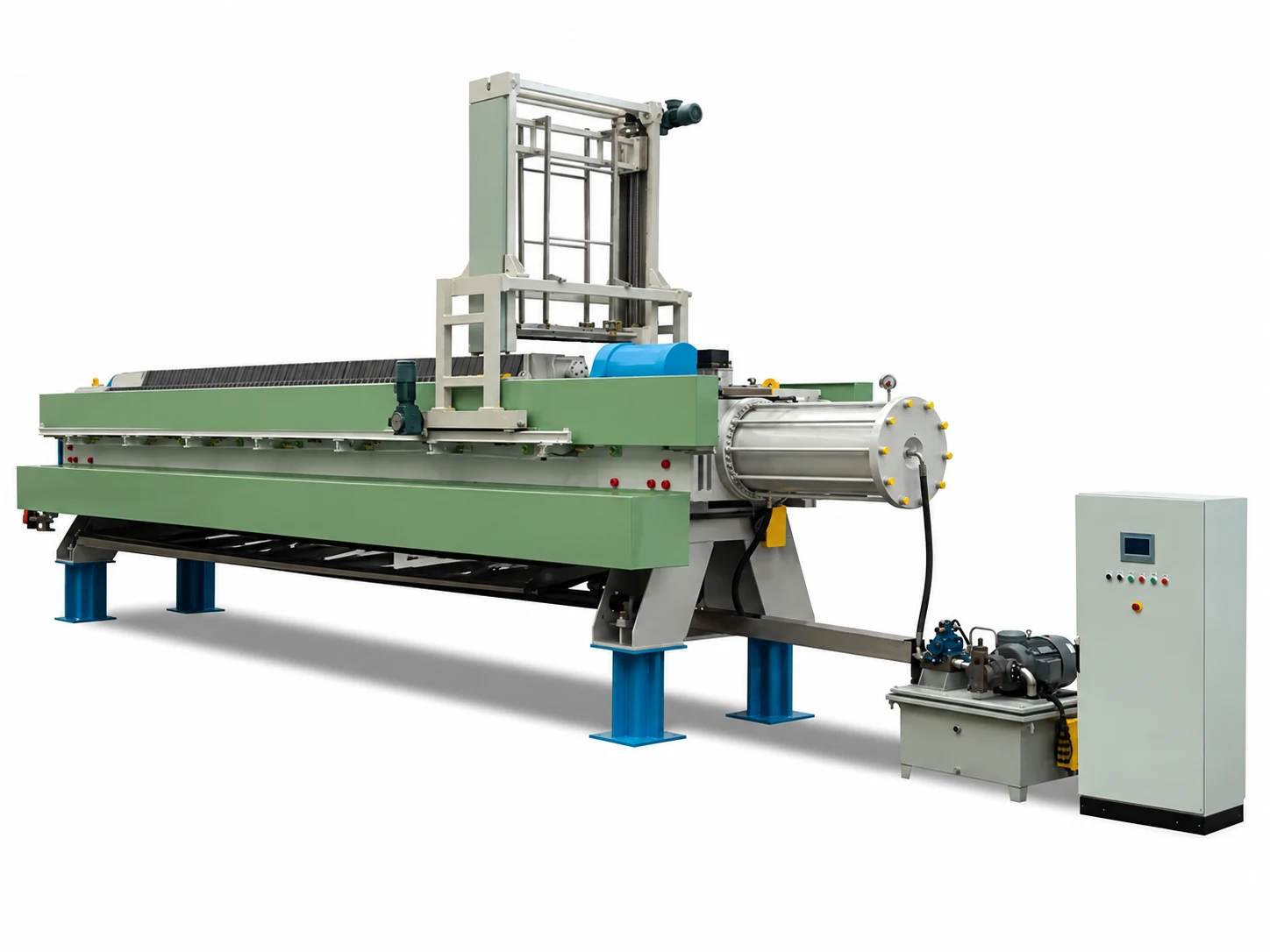
After the chambers fill, the membranes squeeze the cake against the chamber wall. The extra pressure is what lowers cake moisture without a larger press.
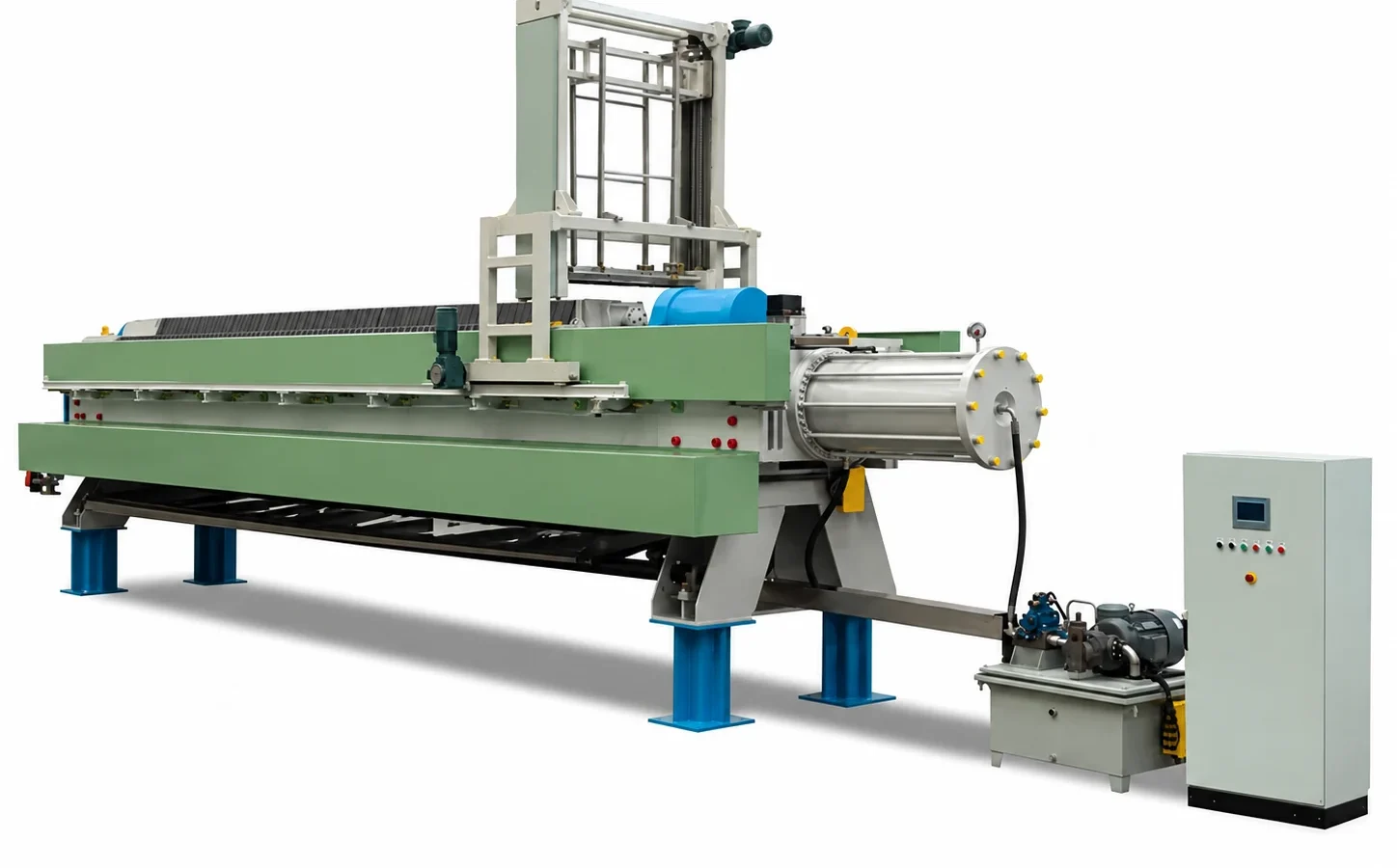
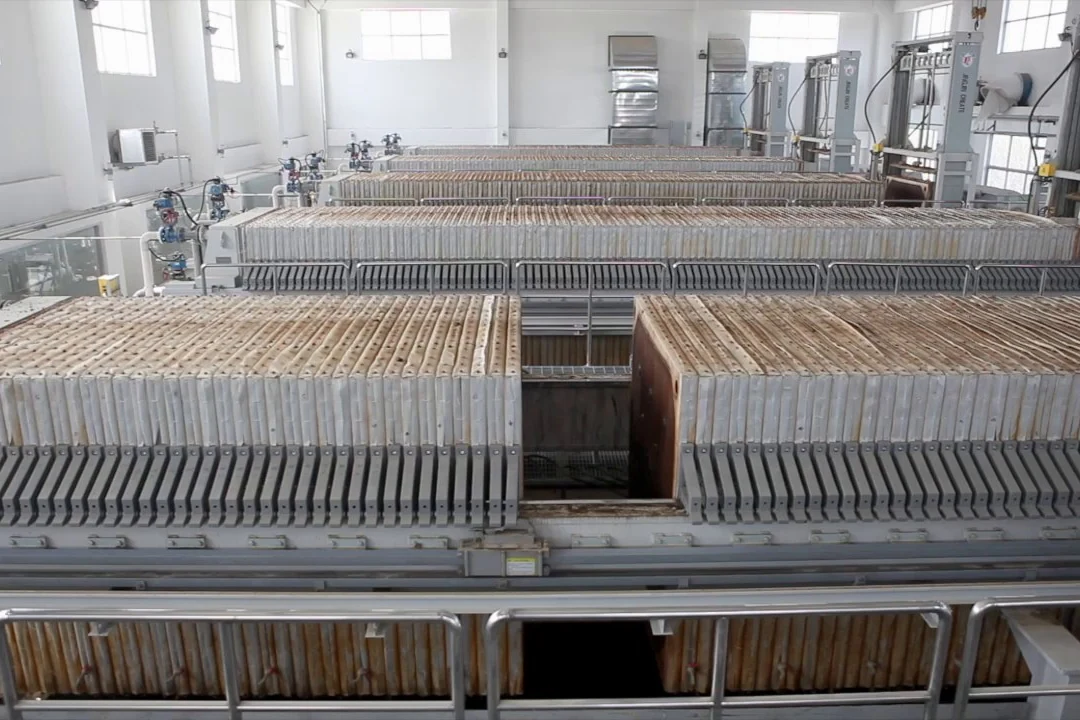
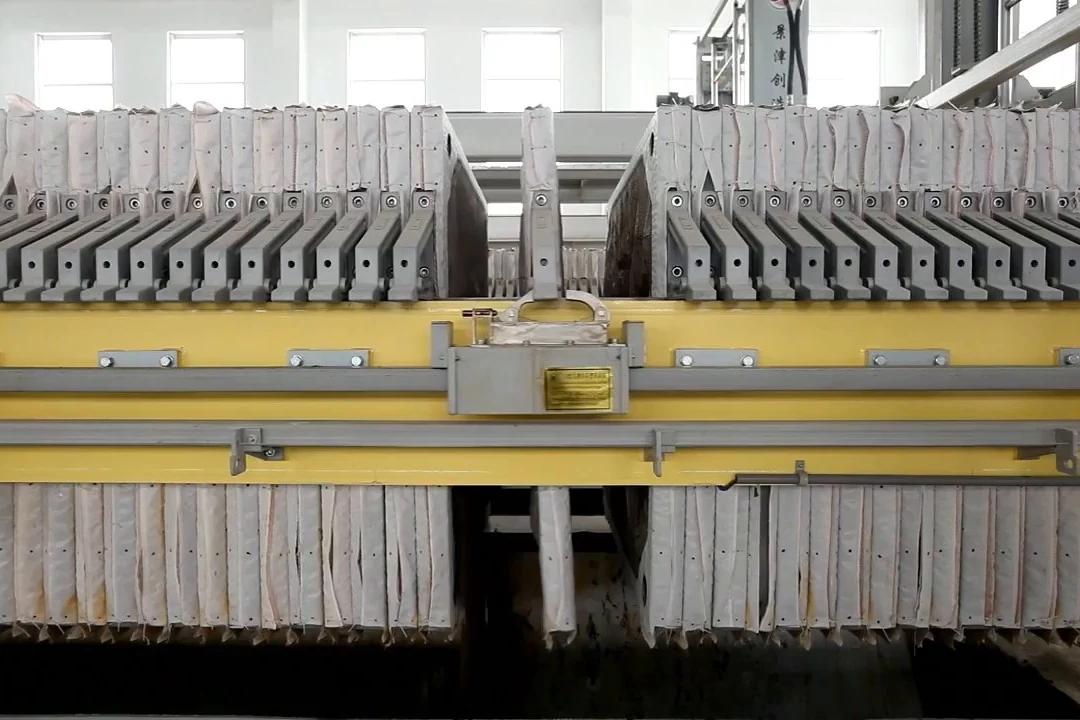
Chamber filtration forms the cake; the membrane plates then press it from both sides. The mechanical squeeze drives out water that pressure alone will not reach, which is how the same frame produces a drier cake.
Where both a chamber and a membrane press fit the duty, the membrane press usually wins on cake moisture and cycle time — at the cost of membranes, which are a wearing part.
Mechanical squeeze after filtration reaches dry solids a chamber press cannot.
Squeezing replaces part of the pumping time, so the press turns over faster.
More water leaves with the filtrate and less with the cake.
Membrane plates fit the standard frame where only the plates have to change.
For low-throughput sites or where the press runs a short shift.
Motorised plate shifting with local control of the cycle.
Programmed sequence for continuous operation and one-man plants.
Press, pump, dosing and control room inside a sea container for quick site moves.
Membrane plates on the same frame where higher dry solids are needed.
Cloth washing, drip trays and bunded skid for urban sites.
Typical range for this class of equipment — the figures for your unit are fixed in the quotation.
| Filter plate size | 1000 × 1000 mm · 1250 × 1250 mm on request |
|---|---|
| Chamber depth | 25 – 30 mm |
| Filtration area | 10 – 200 m² |
| Filtration pressure | 0.6 – 1.6 MPa |
| Squeeze pressure | 1.0 – 2.5 MPa |
| Cycle time | 20 – 60 min |
| Cake moisture | 25 – 40 % |
| Membrane material | EPDM or TPE on a polypropylene carrier |
| Installed power | 11 – 37 kW |
| Weight (empty) | 5 – 26 t |
| Footprint | roughly 5.5 × 2.2 m per unit |
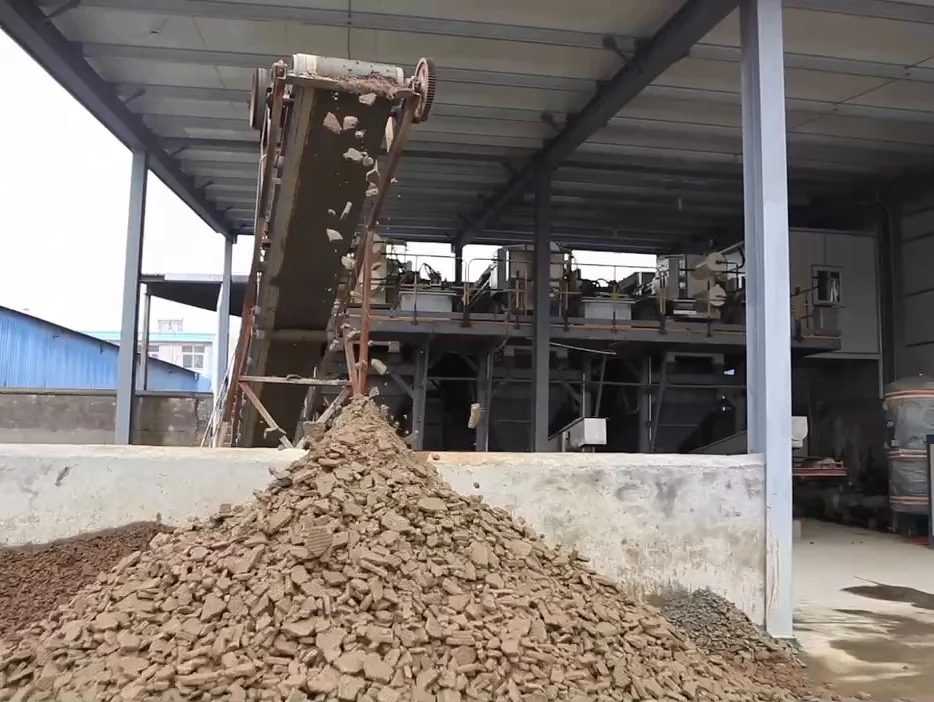
| Filter cake | Discharged to a skip or conveyor; dry solids depend on the slurry and the cycle. |
| Filtrate | Clear enough to return to the slurry tank; the reuse point sets the clarity target. |
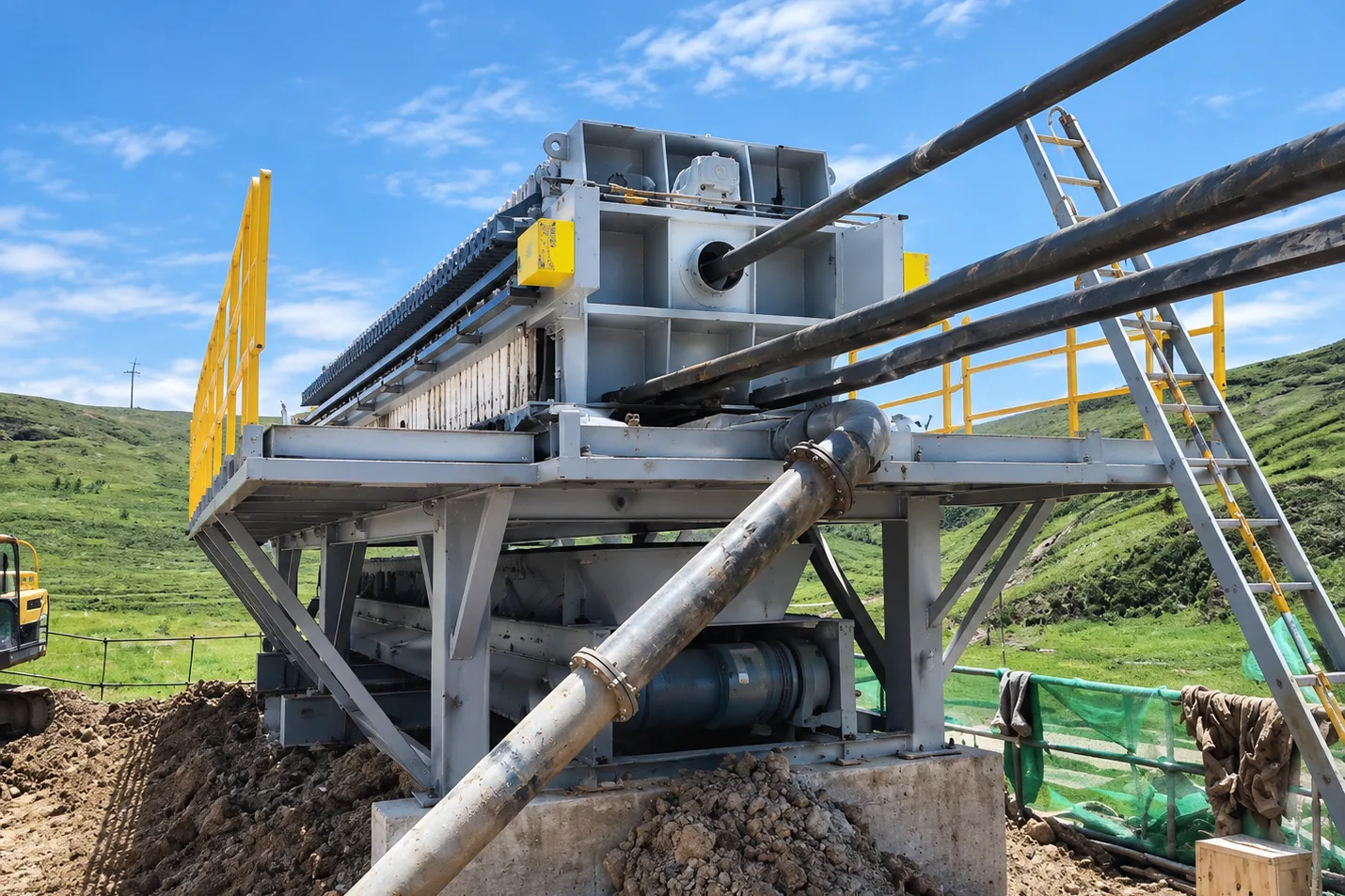
Process and wastewater sludge dewatering, with the filtration cycle matched to the sludge chemistry.
Excavation, diaphragm wall and wash-water sludge, reduced to a transportable cake.
Turning spent bentonite suspensions into stackable cake and reusable water.
When the tipping or recycling route charges per tonne of cake, or when the cake has to be stackable.
Membrane life follows the cycle count and the sludge; it is confirmed for the duty before the press is specified.
A level foundation or skid, three-phase power, water for cloth washing and a place to put the cake.
Every slurry is different. Send us your slurry characteristics and project requirements so our engineering team can evaluate a suitable dewatering solution.
Membrane Filter Press
Every slurry is different. Send us your slurry characteristics and project requirements so our engineering team can evaluate a suitable dewatering solution.